Pickup, parks and Spirit: play ultimate frisbee in Berlin
Where to play ultimate frisbee in Berlin: free pickup games, beginner-friendly clubs, and how to find people to throw with near you.
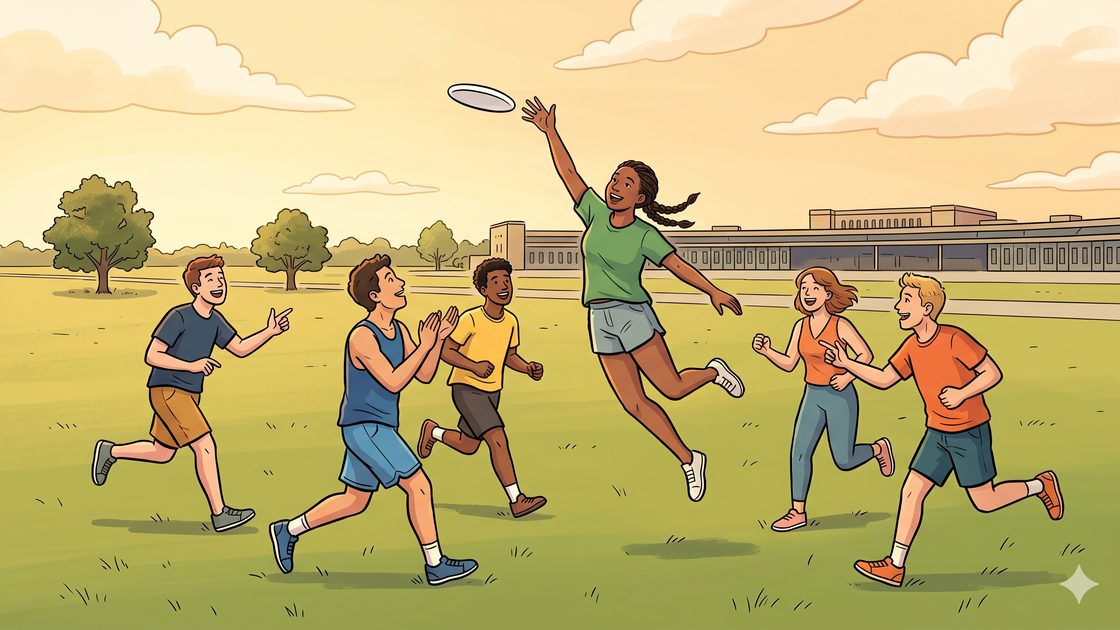
Where to play ultimate frisbee in Berlin comes down to two routes: free, drop-in pickup games in the parks — Saturdays around Treptower Park and Sundays at Mauerpark by the Friedrich-Ludwig-Jahn-Sportpark — or joining one of the city’s clubs, several of which run open trainings that genuinely welcome people who have never thrown a disc. Ultimate is a self-refereed, non-contact team sport that’s usually mixed-gender, so there are no referees to please and no tryout to pass: you show up, someone hands you a disc, and you’re playing within minutes.
The short version:
- Free and easy to try: drop-in pickup games run in the parks all summer — typically Saturdays at Treptower Park (near the Zenner car park) and Sundays at Mauerpark / Friedrich-Ludwig-Jahn-Sportpark. All levels, no sign-up, no kit needed but flat shoes.
- Clubs that take beginners: Lobstars (Lichtenberg, very international), HUCKS Ultimate Club Berlin and the big TiB 1848 ultimate department all run trainings open to newcomers and returners.
- The rule that makes it welcoming: Spirit of the Game — players call their own fouls, there are no referees, and being new is normal rather than awkward.
- Cost: pickup is free; club membership is usually a modest yearly fee. A disc costs around €10–15, and that’s the only gear you need.
- The catch: ultimate only happens with other people — you can’t practise a game of it alone. On MITRA you send an activity request to people near you (“anyone want to throw on Tempelhofer Feld Saturday?”) and meet whoever says yes.
Contents
- What ultimate frisbee actually is
- Where to play pickup ultimate in Berlin
- Berlin’s ultimate clubs, and which take beginners
- Spirit of the Game: the rule that makes it easy to show up alone
- Learning to throw: backhand, forehand and the disc
- What it costs and what to bring
- Where ultimate frisbee came from
- Why ultimate is the easiest team sport to join as a newcomer
- How to find people to play ultimate frisbee with in Berlin
What ultimate frisbee actually is
Ultimate frisbee is a fast, running, non-contact team sport played with a flying disc, in which two teams of seven (or fewer, in pickup and indoor formats) try to score by catching the disc in the opposing end zone. You can’t run while holding the disc — you pivot on one foot and throw to a teammate, and if a pass is dropped, blocked or sails out, the other team takes over on the spot. It rewards movement, quick passing and reading the flight of a disc far more than raw size or strength.
Two things make it unusual. First, there are no referees, even at a high level: players officiate themselves under a code called Spirit of the Game. Second, much of the sport is played mixed — women and men on the same team — which is still rare in field sports and is one reason the community skews open and welcoming. For a newcomer in Berlin, that combination matters: nobody is gatekeeping, and a “real” game can include people who learned the rules twenty minutes earlier.
New here and want people to do things with? MITRA is built for exactly this — meeting people through an activity rather than small talk. Send an activity request, meet whoever’s up for it, and play. Free on both stores.

Where to play pickup ultimate in Berlin
The quickest way into ultimate in Berlin is a free pickup game in a park, where strangers split into teams on the day and anyone can join. These games are run by the community rather than a club, so there’s no membership, no commitment and no skill requirement — turn up, say you’re new, and you’ll be folded into a team.
The most reliable regulars happen on the weekend. On Saturdays, games gather at Treptower Park, on the open grass near the Zenner car park by the Spree. On Sundays, players meet at Mauerpark, on the sports field beside the Friedrich-Ludwig-Jahn-Sportpark in Prenzlauer Berg — the long-running “Park Frisbee” Sunday session mixes a bit of skills coaching with open games, so it’s especially good for first-timers. Both run through the warmer months and welcome all levels.
In summer you’ll also see informal throwing and small games on Tempelhofer Feld, the vast former-airport park whose flat, wide-open space is close to ideal for disc sports, and on the lawns of Volkspark Friedrichshain. Because pickup spots and times shift with the season, weather and school holidays, the dependable move is to check a live listing before you go: the community map at PickupUltimate lists Berlin games by day, and the Mauerpark Ultimate group on Meetup posts its Sunday sessions. Message the organiser that you’re a beginner — it’s expected, and someone will look out for you.
Berlin’s ultimate clubs, and which take beginners
If you catch the bug, Berlin has a deep club scene, and several clubs run trainings that are explicitly open to people with no experience. Joining a club gets you structured coaching, a regular weekly slot, indoor play through the winter, and the option to enter tournaments — but you don’t need to commit to any of that to show up to a first training. A few good starting points for newcomers:
| Club | Based / trains around | Good to know |
|---|---|---|
| Lobstars | Lichtenberg; Sunday training at the Friedrich-Ludwig-Jahn-Sportpark | International and inclusive, English-friendly; runs a free open training day on the first Sunday of the month (May–September) in Mauerpark to teach newcomers the basics |
| HUCKS Ultimate Club Berlin | Berlin-wide; mixed, women’s and open teams plus a youth section | Says outright it welcomes beginners, advanced players and returners — “just come to training or get in touch” |
| TiB 1848 (ultimate dept.) | One of Berlin’s largest multi-sport clubs | Ultimate has been part of TiB since the late 1990s; 200-plus active players across several teams, including top-flight side Wall City and the women’s team Milder Norden |
| Yeahaw Berlin | Berlin; ultimate club since 2003 | One of the city’s long-established clubs, with a friendly recreational core |
The cleanest way to find a team near you, filtered by district, age group and division, is the Vereinsfinder (club finder) run by the Frisbeesport-Landesverband Berlin — the regional flying-disc federation. It maps every registered Berlin team and their training times; the federation simply asks that you message a team before your first visit, since holiday breaks and pitch closures aren’t always reflected on the map.
Rather not show up to a club training solo? Bring someone. On MITRA you can line up a person to try a first session with, so you walk in together instead of alone.
Spirit of the Game: the rule that makes it easy to show up alone
Spirit of the Game is ultimate’s founding principle: players are responsible for fair play and for calling their own fouls, with no referees on the field — even at world-championship level. When there’s a disagreement, the two players involved talk it out; if they can’t agree, the disc goes back to the last undisputed thrower and play continues. It’s written into the rules by the World Flying Disc Federation, the sport’s international governing body.
For a beginner walking into a Berlin park alone, this is the part that quietly removes the fear. There’s no referee to embarrass you and no coach barking from the line. Mistakes get explained, not punished, and “I’m new, can you remind me of the rule?” is a completely normal sentence on a pitch. The same ethos is why ultimate communities tend to be sociable off the field too — many games and tournaments end with both teams sitting in a circle to talk through how it went. You’re not just tolerated as a newcomer; the culture is actively built to absorb you.
Learning to throw: backhand, forehand and the disc
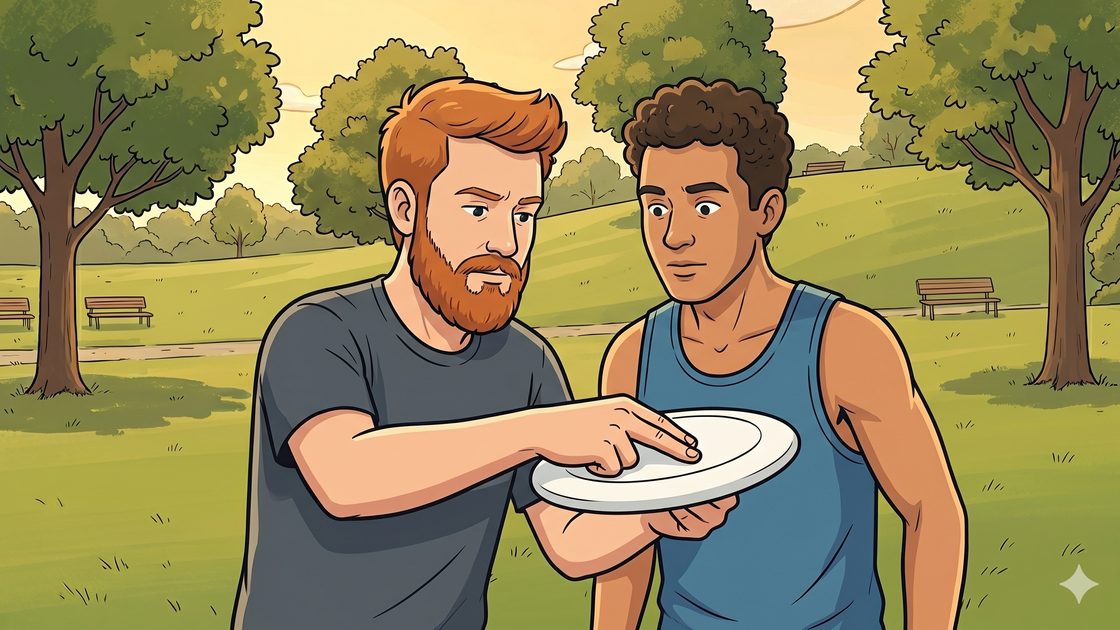
You only need two throws to play, and you can learn the first in an afternoon. The backhand — the natural throw most people already half-know from chucking a disc at the beach — is where everyone starts; the key is a flat release and a flick of the wrist rather than a big arm swing. The forehand (or “flick”), thrown from the same side as your throwing hand with two fingers under the rim, feels awkward for a week and then suddenly clicks, and it’s what lets you pass to either side without turning your body.
The disc itself is standardised: competitive ultimate uses a 175-gram disc, heavier and more stable than a cheap beach frisbee, and it’s worth buying a proper one early because it flies far more predictably. Beyond that, the learning curve is gentle — catching with two hands, pivoting without travelling, and learning to cut into space come naturally once you’re playing. Park pickup games and club beginner sessions will both spend a few minutes on throwing mechanics before games start, so you’re not expected to arrive already good.
What it costs and what to bring
Ultimate is one of the cheapest team sports to start. Pickup games in the parks are free; the only real cost is a disc, and a tournament-standard 175-gram one runs about €10–15. Joining a club typically means a modest annual membership (often in the low hundreds of euros per year, less for students), which covers coaching, indoor hall time over winter and the club’s tournament infrastructure — far cheaper than court-hire sports.
For a first session, bring flat athletic shoes you can sprint and pivot in (trail or turf shoes if it’s a grass pitch; cleats come later if you stick with it), water, and clothes you don’t mind getting grass-stained. That’s genuinely it. Most regular players keep a spare disc in their bag, so even if you don’t own one yet, you’ll have something to throw.
Where ultimate frisbee came from
Ultimate was invented by students at Columbia High School in Maplewood, New Jersey, in the late 1960s. Joel Silver pitched the idea to the student council in 1967, and the first recognised game was played in 1968 with a Wham-O disc; the early rules were drawn up by students Buzzy Hellring, Joel Silver and Jon Hines around 1970, according to the World Flying Disc Federation. The first intercollegiate game followed on 6 November 1972, when Rutgers beat Princeton 29–27 — on the same New Jersey ground where the two had played the first college American-football game 103 years earlier.
Germany has been part of the story almost from the start of its international era: the very first World Ultimate Club Championships were held in Cologne in 1989. Today the sport is organised here by the Deutscher Frisbeesport-Verband (DFV), the national flying-disc federation, which passed 10,000 members in early 2024, with recognised regional associations including one for Berlin. The international body, the WFDF, is recognised by the International Olympic Committee, which is why you’ll increasingly hear ultimate discussed as a future Olympic sport.
Why ultimate is the easiest team sport to join as a newcomer
Ultimate is unusually easy to start as an adult who knows no one, for three concrete reasons. You can’t play it alone, so the whole culture is organised around getting strangers onto a pitch together; the rules are self-officiated, so there’s no referee and no audition; and the entry kit is a single disc. Compare that to most field sports, where you need a full team, fixed positions and often a coach’s say-so before you ever touch the ball.
That’s also exactly why it’s a natural fit for meeting people. A two-hour pickup game gives you something almost no café meet-up does: a shared task, repeated low-stakes interaction, and a built-in reason to come back next week. People who play ultimate together tend to become friends quickly because the format does the social heavy lifting for you. If you’ve just moved to Berlin, an activity like this can do more for your week than a dozen networking events — and it pairs well with the city’s other easy-entry sports, like a park run with a running group, a casual football kickabout, a beach volleyball court in summer, or a pickup basketball game.
How to find people to play ultimate frisbee with in Berlin
The single hardest part of ultimate isn’t the throw — it’s having someone to go with the first time, and a regular crew after that. Pickup games and clubs solve the “where”, but they don’t solve the “who do I actually know here”. That’s the gap MITRA is built for.
On MITRA you send an activity request to people near you — say, “anyone want to throw a disc on Tempelhofer Feld this Saturday?” or “looking for someone to try the Mauerpark Sunday pickup with” — and the people who’re up for it accept. There’s no auto-matching and no swiping: you choose who to reach out to, and they choose whether to say yes. It’s a simple, consent-based way to turn “I’d like to try this” into a plan with an actual person attached.
Turn the idea into a Saturday plan. Post that you want to throw a disc, find someone nearby who’s in, and go.
It also works alongside everything above. Use MITRA to find a buddy, then take them to a free park pickup or a club beginner training together — much easier than walking in cold. If you’re still finding your feet in the city, it slots into a wider week of low-pressure ways to meet people, from things to do when you’re on your own to a relaxed park picnic or a game of table tennis on a public park table.
How we checked
We checked current club pages, training listings and the Berlin flying-disc federation’s club finder in June 2026, and cross-referenced pickup locations against community game listings. Park pickup times shift with the season and weather, so always confirm the day’s game on the relevant Meetup or PickupUltimate listing before heading out.
Frequently asked questions
Where can I play ultimate frisbee in Berlin for free?
Free, drop-in pickup games run in the parks through the warmer months. The most reliable regulars are Saturdays at Treptower Park, on the grass near the Zenner car park, and Sundays at Mauerpark beside the Friedrich-Ludwig-Jahn-Sportpark in Prenzlauer Berg. You’ll also see informal throwing on Tempelhofer Feld and in Volkspark Friedrichshain. Times shift with the season, so check a community listing like PickupUltimate or the Mauerpark Ultimate Meetup group before you go.
Do I need experience to play ultimate frisbee in Berlin?
No. Pickup games and most club beginner trainings are built to absorb complete newcomers, and you can learn enough to play in a single afternoon. There’s no referee and no tryout, so being new is normal rather than awkward. Tell whoever’s organising that it’s your first time — it’s expected, and someone will explain the basics and look out for you on the field.
Which Berlin ultimate frisbee clubs welcome beginners?
Several do. Lobstars, based in Lichtenberg, is very international and runs all-levels Sunday training plus a free monthly open day in Mauerpark from May to September. HUCKS Ultimate Club Berlin states it welcomes beginners, advanced players and returners. TiB 1848’s large ultimate department also takes newcomers. The Berlin flying-disc federation’s online Vereinsfinder maps every registered team and training time, filterable by district and level.
What is Spirit of the Game?
Spirit of the Game is ultimate’s core principle: players officiate themselves and call their own fouls, with no referees on the field, even at world-championship level. When players disagree, they talk it out, and if they can’t agree, the disc returns to the last undisputed thrower. It’s written into the rules by the World Flying Disc Federation. In practice it makes the sport friendly and easy to enter, because mistakes get explained rather than punished.
What do I need to bring to my first session?
Very little. Bring flat athletic shoes you can sprint and pivot in, water, and clothes you don’t mind getting grass-stained. You don’t need your own disc to start, because most regular players carry a spare. If you decide to continue, a tournament-standard 175-gram disc costs about €10–15 and flies far more predictably than a cheap beach frisbee, so it’s worth buying one early.
How much does it cost to play ultimate frisbee in Berlin?
It’s one of the cheapest team sports to start. Park pickup games are completely free; your only real cost is a disc, around €10–15. Joining a club usually means a modest annual membership, often in the low hundreds of euros per year and less for students, which covers coaching, indoor hall time over winter and access to tournaments. There are no court-hire fees, unlike many racket and indoor sports.
Is ultimate frisbee mixed-gender?
Often, yes. Much of ultimate is played mixed, with women and men on the same team, which is still uncommon in field sports and is one reason the community tends to be open and welcoming. There are also single-gender divisions (open and women’s) for those who prefer them, especially in club and tournament play. For casual park pickup, games are almost always mixed and anyone can join.
How many players are on an ultimate frisbee team?
A standard outdoor ultimate team fields seven players per side. Pickup and indoor games are usually smaller — often five-a-side indoors or whatever number turns up at the park, split into even teams. You score by catching the disc in the opposing end zone, you can’t run while holding it, and a dropped, blocked or out-of-bounds pass immediately turns possession over to the other team.
When is the ultimate frisbee season in Berlin?
Outdoor pickup and club training run mainly from spring through autumn, peaking over the Berlin summer when the parks are busy. Many clubs continue indoors through the winter in sports halls, and there’s a full indoor competition season too. Lobstars’ free open training days in Mauerpark, for example, run on the first Sunday of each month from May to September. Always confirm a specific session before heading out.
How do I find people to play ultimate frisbee with in Berlin?
Pickup games and clubs give you the “where”, but the harder part as a newcomer is having someone to go with. On MITRA you send an activity request to people near you — for example, “anyone want to throw a disc on Tempelhofer Feld this Saturday?” — and whoever’s up for it accepts. There’s no auto-matching: you choose who to ask, and they choose whether to say yes, then you meet up and play.
Sources
- World Flying Disc Federation (WFDF) — History of Ultimate and About WFDF (origins at Columbia High School 1968; rules by Hellring, Silver, Hines ~1970; Rutgers v Princeton 29–27 on 6 Nov 1972; first World Ultimate Club Championships, Cologne 1989; IOC-recognised international governing body).
- WFDF — Spirit of the Game (self-officiation; players call their own fouls; no referees).
- Deutscher Frisbeesport-Verband (DFV) — Verband (German national flying-disc federation; over 10,000 members since January 2024; recognised regional associations including Berlin).
- Frisbeesport-Landesverband Berlin e.V. — Vereine und Trainings (club & training finder) (Berlin regional federation; map of registered teams by district, age and division).
- HUCKS Ultimate Club Berlin e.V. — official site (welcomes beginners, advanced and returning players; mixed, women’s and open teams plus youth section).
- Lobstars Ultimate Frisbee Berlin — official site and Mauerpark Ultimate on Meetup (all-levels Sunday training at the Friedrich-Ludwig-Jahn-Sportpark; monthly open day in Mauerpark, May–September).
- TiB 1848 e.V. — Ultimate Frisbee department (part of the programme since the late 1990s; 200-plus active members; teams including Wall City and Milder Norden).
- PickupUltimate — Berlin pickup games map (community listing of drop-in games by day).
Want to keep reading?
- How to find a running partner in Berlin
- How to find people to play football with in Berlin
- Where to play beach volleyball in Berlin
- Where to play pickleball in Berlin
- Things to do alone in Berlin
Find your people through what you love doing. MITRA helps you meet activity partners near you in Berlin — send a request, meet whoever says yes, go play. Free to download.
Follow MITRA on Instagram @mitra.app for more Berlin activity ideas. Berlin first. Bucharest and more EU cities coming soon.