How to make friends in Berlin in your 30s
Making friends in Berlin in your 30s feels harder than at 22 — but it’s very doable. A realistic, activity-first plan to build a real circle here.

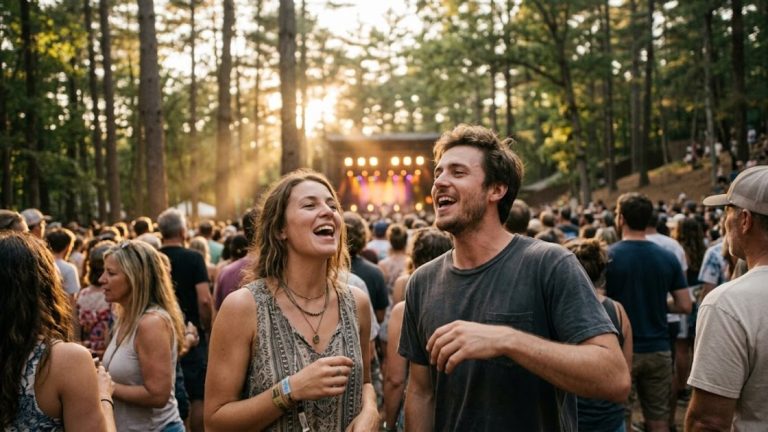
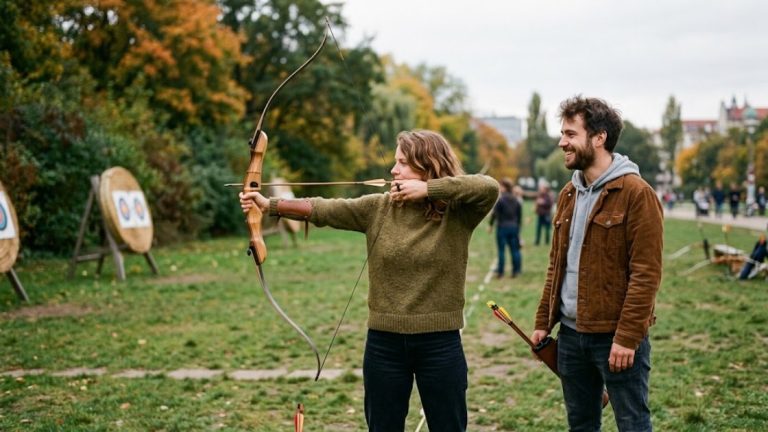
Making friends in Berlin in your 30s works best when you stop trying to make friends and start showing up to the same activity every week. Repeated, low-pressure contact around something you’d do anyway — a sport, a course, a club night — is how adult friendships actually form, and Berlin is unusually full of people in exactly your position.
The short version:
After about 25, our social circles naturally shrink, so friendship in your 30s takes deliberate effort — and research suggests it takes roughly 50 hours of shared time to turn an acquaintance into a real friend (Jeffrey Hall, 2019).
The reliable method: pick one recurring, in-person activity near you and go weekly for a few months. In Berlin that means a sports club, a Volkshochschule course, a run crew, a climbing gym or a book club.
More than half of Berlin’s households are one person — the people you’re looking for are looking too.
Contents
- Why does making friends get harder after 30?
- What it actually takes, in hours
- Is Berlin a hard city to make friends in?
- Where do people in their 30s meet friends in Berlin?
- Does the neighbourhood matter?
- Just moved, and don’t speak German?
- Where MITRA fits
- Making friends in your 30s — and making it stick
- FAQ
Why does making friends get harder after 30?
Friendship gets harder in your 30s because the two things that built your old circles — forced proximity and unstructured time — mostly disappear after school and university. You no longer share a timetable, a dorm corridor or a dozen free evenings a week with the same people.
There’s a measurable pattern underneath the feeling. Analysing 3.2 million European mobile users, researchers at Oxford and Aalto found that our active social circles tend to peak around age 25 and shrink steadily after that, as careers, relationships and moves pull people apart faster than we replace them.
So the quiet sense that your circle got smaller isn’t a personal failing — it’s the default trajectory for almost everyone once the built-in structures of youth fall away. In your 30s, the friendships that used to happen to you now have to be built on purpose.
What it actually takes, in hours
Research puts a number on friendship. Studying people who had recently moved and were starting from scratch, psychologist Jeffrey Hall found it takes roughly 50 hours of shared time to move from acquaintance to casual friend, about 90 hours to become friends, and more than 200 hours to become close.
The catch is that the hours have to be the right kind — hanging out, joking around, doing something together. Time spent politely side by side, or just working, barely moves the needle. That’s exactly why a shared activity beats a networking event.
Do the Berlin maths: a single weekly two-hour activity adds up to about 50 hours over six months — the acquaintance-to-friend threshold — without a single “let’s grab a coffee sometime” that never happens.
This reframes the whole problem. You don’t need to be more charming or say yes to more one-off invitations. You need one recurring thing, attended often enough that the same faces keep coming back — consistency, not intensity, is what turns a room of strangers into your people.
Know the activity you want but not the people yet? That’s the gap MITRA is built for: you send an activity request to people near you, and you meet the ones who accept.
▶ Get MITRA on Google Play · Download MITRA on the App Store
Is Berlin a hard city to make friends in?
Berlin has a reputation for being cold, and the data half-agrees — but the same numbers show why it’s actually one of the easier big cities to build a circle in your 30s. The reputation is about first contact; the opportunity is about sheer numbers.
On the hard side: in the long-running InterNations Expat Insider survey of thousands of people living abroad, Germany repeatedly lands near the bottom for how easy it is to make local friends. Newcomers often read early German reserve as rejection, when it’s usually just a slower on-ramp to friendship.
On the easy side, the math is squarely in your favour. According to the Amt für Statistik Berlin-Brandenburg, single-person households make up 56.5% of all Berlin households — rising to 63.3% in Friedrichshain-Kreuzberg. That is a city of over a million people who mostly go home alone and would happily not.
A city where more than half of all households are a single person is not short of people who’d rather not spend every evening alone.
And the underlying need is universal, not a Berlin quirk. The World Health Organization’s 2025 Commission on Social Connection reported that around one in six people worldwide feels lonely — so the person next to you at the climbing gym is far more likely to welcome a “same time next week?” than to find it strange.
The practical takeaway: in Berlin the barrier is initiation, not desire. Almost everyone wants the connection; very few make the first move. Being the one who suggests the next meetup is a small act that puts you ahead of most of the city.

Where do people in their 30s meet friends in Berlin?
The dependable routes all share one feature: they put you in the same room as the same people on a schedule. Anything you can join weekly and keep joining beats a one-off, however fun the one-off was.
Germans organise their hobbies through Vereine — registered clubs — more than almost anywhere, and Berlin has one for nearly everything, from football to badminton to choir. A club gives you the two ingredients friendship needs: a fixed time and a returning cast.
The city also runs adult-education centres, the Volkshochschulen, with a branch in every borough. A Volkshochschule evening course — German, pottery, cooking, drawing — costs only a few euros a session and drops you into a small, recurring group that meets for weeks, which is close to the ideal friendship-forming setup.
| Route | What it is | Best for | Cost signal |
|---|---|---|---|
| Sports Verein / club | Weekly training in one sport | Team feel, built-in structure | Modest monthly membership |
| Volkshochschule course | Evening class over several weeks | Quieter people, small groups | A few € per session |
| Run crew / parkrun | Free weekly group runs | Fitness plus low-commitment social | Free |
| Climbing / bouldering gym | Partner-based indoor sport | Natural pairing with strangers | Day pass ~€12–17 |
| Book club / language tandem | Conversation-led meetups | Expats, English-friendly starts | Free–low |
| CrossFit box / group night | High-energy class or league | Fast bonding, regular faces | Class/drop-in fee |
If moving helps you relax into a room, the gym routes work well: our guide to CrossFit in Berlin covers boxes where the same class trains together three times a week, and bouldering for beginners is the rare sport where you literally have to talk to a stranger to keep going. Prefer to run? Our Berlin running guide lists the free weekly crews.
For lower-key, talk-based options, a Berlin book club or a language exchange (Tandem) gives you a reason to meet and something to talk about before you’ve run out of small talk. And when the weather’s good, half of Berlin’s socialising simply moves to a beer garden — an easy, no-pressure place to invite someone new.
Want the fun without the solo sign-up nerves? Line up a group for the same activity first. Fancy something faster — say a go-karting night? MITRA lets you find people nearby who want in, so you arrive with a crew instead of alone.
▶ Get MITRA on Google Play · Download MITRA on the App Store
Does the neighbourhood matter?
A little — different districts skew to different life stages, so it helps to aim at the scene that matches yours rather than the most famous postcode. You’ll settle faster where the crowd is roughly in your chapter of life.
Prenzlauer Berg reads as the classic thirty-something district — cafés around Kollwitzplatz, weekend markets, a lot of people who arrived young and stayed. Neukölln and Kreuzberg skew younger and more international, heavy on bars, canal-side hangs and a constant churn of newcomers. Friedrichshain sits in between, sporty and social.
That said, the district matters far less than the habit. A weekly club in a neighbourhood you don’t live in will build more friendships than aimlessly hanging around the “right” one. Pick the activity first; let the postcode follow.

Just moved, and don’t speak German?
You can build a full social life in English in Berlin — the city runs on it — but a little German widens the door fast. Thousands of people in their 30s arrive here every year not speaking the language and find their people anyway; the trick is to lean on the English-friendly formats first.
Start where language is the point, not the barrier. A language tandem pairs you with someone who wants your language as much as you want theirs, which turns “I don’t speak German” from a wall into the entire reason to meet. English-language book clubs, international sports teams and expat-heavy classes work the same way.
Then give the German reserve some grace. What can feel like being frozen out in your first month is usually just a culture that treats friendship as a slow, sincere commitment rather than instant warmth. The people who seem hard to reach in week one are often the ones who become steady, lifelong friends by month six.
Where MITRA fits
MITRA is for the specific gap between wanting to go and having someone to go with. The club, the course and the run crew all work — but only once you’ve actually turned up, and the hardest step is often turning up the first time on your own.
Here’s how it works: you open the app, see people nearby who want to do the same activity, and send them an activity request; they accept the ones they want. Nobody is paired off automatically and nothing is decided for you — both sides choose, so every meetup is two people who actively said yes.
Think of it as the on-ramp, not the replacement. Use it to find a first companion for the bouldering gym or the beer garden, then let the weekly routine and Hall’s 50 hours do the slow, real work of turning that first hello into a friendship.
New to the city or just rebuilding your circle, the first step is the same: pick one activity and find one person to start with. MITRA is made for that first yes.
▶ Get MITRA on Google Play · Download MITRA on the App Store
How to make friends in Berlin in your 30s and make it stick
The single highest-leverage move is the unglamorous one: go back a second time, then a third. Most almost-friendships die not from a bad first meeting but from nobody proposing the next one.
So be the one who suggests it, and keep the bar low. “Same class next Tuesday?” or “coffee after the run?” asks for almost nothing and gets said yes to far more often than a big dinner invitation. Small, frequent and easy beats rare and elaborate every time.
Give it a season, not a week. If you show up to one recurring thing from now through the autumn, you will quietly clear Hall’s 50-hour mark with several people at once — and somewhere in there, without a single forced “networking” moment, you’ll have made friends in Berlin.
How we checked: the friendship-hours figures come from Jeffrey Hall’s 2019 study in the Journal of Social and Personal Relationships; the social-circle-peak finding from Bhattacharya and colleagues in Royal Society Open Science (2016); the loneliness figure from the WHO Commission on Social Connection’s 2025 report; and the household data from the Amt für Statistik Berlin-Brandenburg (2025, for year-end 2024). Berlin venue and course details were reviewed in July 2026.
Want to keep reading?
- Things to do alone in Berlin — good for the days between meetups, and a few of them are easy to turn social.
- CrossFit in Berlin — the boxes where the same class becomes a friend group.
- Go-karting in Berlin — a fast, easy first group outing that breaks the ice for everyone.
Rebuilding your circle after 30? Pick one activity this week and find one person to do it with. MITRA helps you meet people near you for the things you actually want to do — you send the request, they say yes, and you show up.
▶ Get MITRA on Google Play · Download MITRA on the App Store
Follow us on Instagram @mitra.social for more Berlin connection ideas. Berlin first. Bucharest and more EU cities coming soon.
How do you make friends in Berlin in your 30s?
Pick one recurring, in-person activity near you — a sports club, a Volkshochschule evening course, a run crew, a climbing gym or a book club — and go weekly for a few months. Adult friendships form through repeated, low-pressure contact around a shared activity, not through one-off events. Show up often enough that the same faces recur, suggest the next meetup yourself, and the friendships form on the side.
Is it really harder to make friends after 30?
Yes, and it’s not just you. Research analysing millions of people found our active social circles tend to peak around age 25 and shrink after that, as jobs, relationships and moves scatter the friends we already had. The built-in structures of school and university — shared timetables and free time — disappear. In your 30s, friendships you used to fall into now have to be built deliberately, which is very doable once you know that.
How much does it cost to build a social life in Berlin?
Very little. Group runs and parkruns are free, Volkshochschule evening courses cost only a few euros a session, and a bouldering day pass runs about €12–17. Sports-club memberships are usually a modest monthly fee. The real “cost” is time and consistency, not money — one regular weekly activity, kept up for a season, does far more than any expensive night out.
Can you make friends in Berlin if you only speak English?
Absolutely — Berlin runs on English, and thousands of people in their 30s arrive each year without German and build full social lives. Start with English-friendly formats: language tandems, English book clubs, international sports teams and expat-heavy classes. A little German widens the door faster, but it’s genuinely not a prerequisite for making friends here. Lean on the formats where language is the point, not the barrier.
How long does it actually take to make a friend?
Psychologist Jeffrey Hall’s research suggests roughly 50 hours of shared time to move from acquaintance to casual friend, about 90 hours to become friends, and more than 200 to become close. Crucially, it has to be relaxed, shared time — hanging out and doing things together, not just being in the same room. A single weekly two-hour activity reaches that first 50-hour mark in about six months.
Which Berlin neighbourhoods are best for meeting people in your 30s?
Prenzlauer Berg is the classic thirty-something district — cafés around Kollwitzplatz, weekend markets and lots of people who arrived young and stayed. Neukölln and Kreuzberg skew younger and more international, while Friedrichshain sits sporty in between. That said, the district matters far less than the habit: a weekly activity in any neighbourhood beats hanging around the “right” postcode with no plan.
What if I’m shy or introverted?
Activity-based routes are ideal for introverts because the activity carries the interaction — you’re bouldering, cooking or running, so there’s always something to do and talk about instead of open-ended small talk. Smaller, recurring formats like a Volkshochschule course or a book club feel far less exposing than a big party, and seeing the same few faces each week lets friendships build slowly at your own pace.
Is Berlin an unfriendly city for newcomers?
Berliners have a reputation for early reserve, and expat surveys do rank Germany low for how quickly locals open up. But that reserve is usually a slower on-ramp, not rejection — German friendship tends to be a slow, sincere commitment rather than instant warmth. With over half the city living in single-person households, the desire to connect is everywhere; the barrier is initiation, so being the one who suggests the next meetup goes a long way.
Sources
- Jeffrey A. Hall (2019), “How many hours does it take to make a friend?”, Journal of Social and Personal Relationships — journals.sagepub.com; summary via University of Kansas, news.ku.edu (2018).
- Bhattacharya, Ghosh, Monsivais, Dunbar & Kaski (2016), “Sex differences in social focus across the life cycle in humans”, Royal Society Open Science — royalsocietypublishing.org (social circle peaks ~age 25, then declines; 3.2M European mobile users).
- World Health Organization, Commission on Social Connection (2025), From loneliness to social connection: charting a path to healthier societies — who.int (around one in six people affected by loneliness).
- Amt für Statistik Berlin-Brandenburg (2025, data as of 31 Dec 2024) — single-person households 56.5% of all Berlin households (63.3% in Friedrichshain-Kreuzberg), statistik-berlin-brandenburg.de.
- InterNations, Expat Insider survey (named survey of thousands of people living abroad) — Germany ranks near the bottom for ease of making local friends (labelled as survey data, not an official statistic).