
66 lakes and rubble peaks: find a hiking partner in Berlin
Want a hiking partner in Berlin? How to find a hiking buddy near you — the best trails and day hikes, safety tips, and a faster way to walk together.
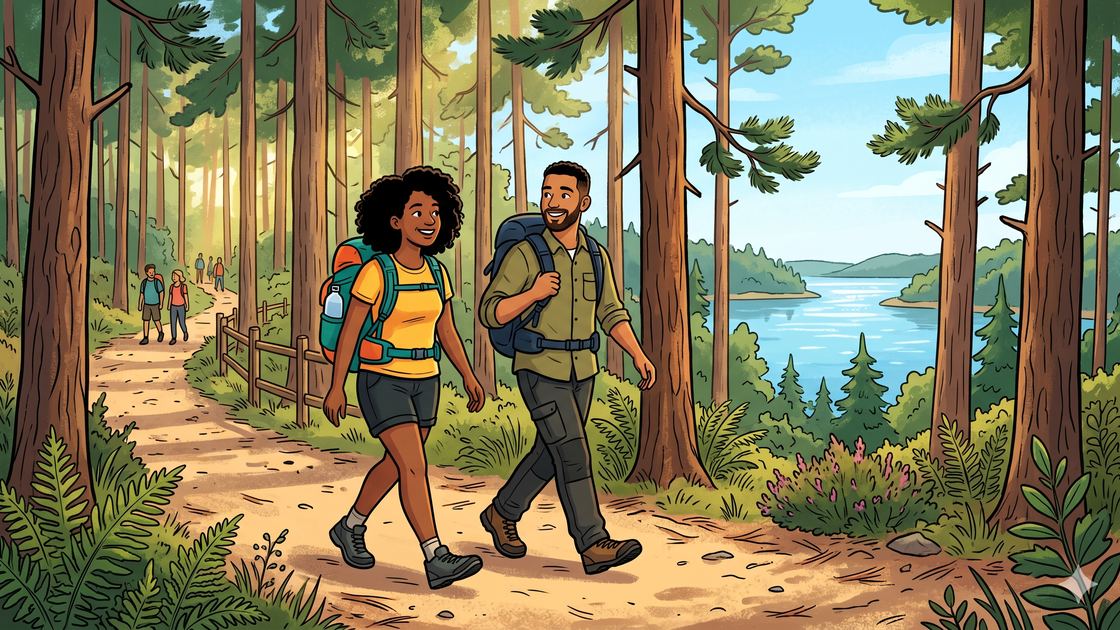
Finding a hiking partner in Berlin is mostly about getting yourself where walkers already gather: join a led walk with the German Alpine Club’s huge Berlin section, book onto a guided tour of the city’s old spy-station hill, become a regular on one forest-and-lake loop — or send a hike request through an activity app to someone nearby who wants company on the trail. Pick one, show up on the same day, and a walking partner appears faster than you’d expect.
The short version:
- Berlin has far more to walk than newcomers realise: a 3,000-hectare forest, a 416 km lakes trail that loops the whole city, and a clutch of hills with a strange backstory.
- The quickest route to a partner is a led group walk — the Deutscher Alpenverein’s Berlin section alone has around 20,000 members and runs day tours — or a guided hike up Teufelsberg, the rubble hill topped by an abandoned Cold War spy station.
- Fun fact to drop on your first hike: most of Berlin’s “mountains” are man-made, and the city’s highest point quietly moved to a former rubble tip in Pankow.
- Hiking with someone is safer on the remoter Brandenburg stages and far more likely to stick. MITRA lets you line up a partner before you lace your boots.
Berlin is one of Europe’s easiest big cities for getting into nature without really leaving it: flat, green, ringed by forest and lakes, and wrapped by a signposted long-distance trail through Brandenburg. On a clear weekend the woods fill with walkers. What’s harder to find than somewhere to hike is the thing that turns the odd solo walk into a habit: someone to do it with.
New to Berlin and tired of hitting the trail alone? Find your hiking partner with MITRA — it’s free to start. Get MITRA on Google Play or download for iPhone.
Contents
- Berlin’s hills have a secret — and its highest point just moved
- The trails and day hikes worth knowing
- The walking groups (and one spy-station tour) that introduce you
- How to turn a trailhead nod into a standing hike
- Hiking near Berlin safely
- How MITRA helps you find a hiking partner near you
- Your first weekend on the trail
- Frequently asked questions
Berlin’s hills have a secret — and its highest point just moved
Here’s the thing nobody tells you when you arrive: most of Berlin’s “mountains” aren’t natural. They’re Trümmerberge — rubble hills, piled up from the ruins of the city after the Second World War and then grassed over into parks and viewpoints. Only a couple of Berlin’s high points, the Großer Müggelberg and the Schäferberg, were shaped by ice-age glaciers; the rest are debris with a view.
The most famous is Teufelsberg in the Grunewald: roughly 120 metres high, built from an estimated 75 million cubic metres of wartime rubble — and topped by one of the strangest landmarks in Germany. During the Cold War the Americans and British ran a secret listening station up there, and its skeletal radar domes still crown the hill. Since 2011 you can walk up and tour the site, which makes it a brilliant, slightly surreal place to meet other curious walkers.
Then the twist: Teufelsberg isn’t even Berlin’s highest point any more. A former construction-rubble tip out at the Arkenberge in Pankow has been built up to around 121 metres, quietly overtaking it to become the highest point in the city. The highest natural hill is still the Großer Müggelberg (114.7 m) out east by the Müggelsee, where a proper observation tower, the Müggelturm, looks out over the lakes.
And the green is genuinely vast: the Grunewald is Berlin’s largest contiguous forest at about 3,000 hectares, threaded with easy trails and ringed by swimmable lakes. The point of all this: there is far more to walk here than you’ll get through alone — which is the whole case for a partner.
The trails and day hikes worth knowing
The best routes for meeting someone draw a steady, sociable crowd and start at an S-Bahn station. We checked transit, length and the kind of walkers each draws as of June 2026; trail conditions and seasonal access change, so check a current map and the weather before you head out.
| Route | Getting there / length | Why it’s good for hiking together |
|---|---|---|
| Schlachtensee + Grunewald | S1 to Schlachtensee; ~5.5 km lake loop, longer in the forest | Easy, pretty, very social on weekends — the gentlest first hike |
| Teufelsberg + Drachenberg | S9/S75 to Heerstraße; ~4 km, ~1–1.5 h | Short climb, huge views, and the abandoned spy station — a talking point built in |
| Großer Müggelberg + Müggelsee | S3 to Friedrichshagen; ~10–15 km | Berlin’s highest natural hill, the Müggelturm tower and a lakeside finish |
| 66-Seen-Wanderweg (a stage) | regional trains from the city; stages ~18–31 km | The 416 km lakes loop in day-sized stages — a partner project for a whole season |
| Naturpark Barnim | S/tram to Berlin’s north edge; varied | Big, quiet nature park reaching into Pankow and Reinickendorf |
| Tegeler Forst + Tegeler See | U6 to Alt-Tegel; gentle | Calm north-west woods and lakeshore — beginner-friendly |
The standout for a partner challenge is the 66-Seen-Wanderweg — the 66 Lakes Trail. It circles Berlin for about 416 kilometres in 17 stages, starts and ends at the Brandenburger Tor in Potsdam, and is waymarked the whole way with a blue “66” ringed by little waves. Because every stage begins and ends at a train station, you can knock off one a weekend with the same person and watch the seasons change around the city. It’s the same “just show up and you belong” pull that gets so many Berliners into bouldering as beginners — the route does the welcoming for you.
Found a trail you love? Now find the person to walk it with — send a hike request near you. Download MITRA on Google Play or get it on the App Store.
The walking groups (and one spy-station tour) that introduce you
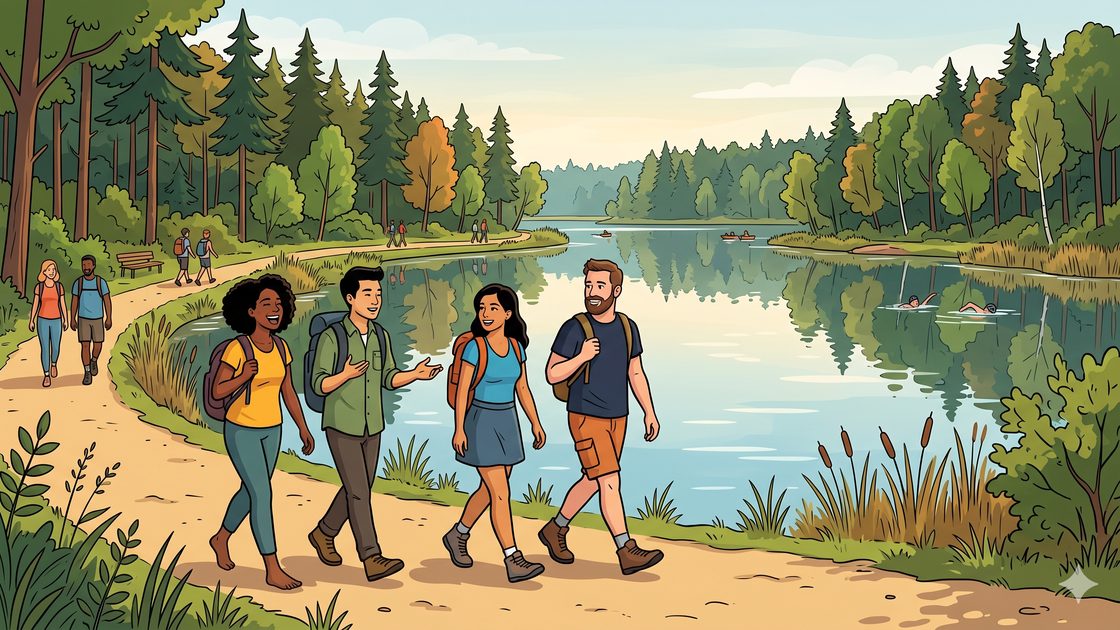
The fastest way to meet walkers is to join something where turning up together is the whole format — and Berlin has more of these than you’d think.
The German Alpine Club, Berlin section (DAV Berlin). This is the big one: around 20,000 members, making it one of the city’s largest sports clubs, with dedicated hiking groups running day and weekend tours in and around Berlin and Brandenburg. You’re placed with the same people repeatedly, which is exactly how trailhead strangers become a regular crew. Nationally, the Deutscher Wanderverband — the umbrella body for Germany’s hiking clubs since 1883 — is a good way to find an organised group near you.
Hiking Meetups and casual groups. Berlin has a lively scene of relaxed-pace walking and “Wandergruppe” Meetups that head out to the lakes and the 66-Seen stages most weekends — a low-commitment way to meet people who already walk.
The quirky one: a guided Teufelsberg tour. Booking onto one of the guided walks up the old spy-station hill is a genuinely fun, low-pressure way to meet other curious people — everyone’s a bit of an explorer up there, and conversation comes easily. It’s the same reason finding a cycling partner in Berlin works so well: when the activity is the reason you’re both there, talking takes care of itself.
How to turn a trailhead nod into a standing hike
The trick to asking someone to hike is to make it specific and tied to the next outing — not “want to be hiking buddies?” but “I do a Schlachtensee loop most Saturdays around ten, want to walk it together this week?” A concrete time and place is far easier to say yes to than an open-ended one.
A few things help it land in Berlin, where plenty of walkers are also new and would happily have a regular partner. Open with something easy — “any idea if the Grunewald trails are dry after the rain?” — mention you’re trying to get out most weekends, and propose a fixed recurring slot so it becomes a habit. If they’re not up for it, no harm: you’ll both be back next weekend. So many people here arrived alone and are in the same spot, which is why shared activities — not bars — are how most end up meeting people and making friends.
Hiking near Berlin safely
The most useful habit for hiking around Berlin is to tell someone your route and rough timing — and walking with a partner takes care of that automatically. Two walkers are harder to lose than one: you can share navigation across phones and a paper map, keep each other honest about turning back before dark, and there’s someone on hand if a twisted ankle leaves one of you stuck far from a station.
A few practical basics: the forest and lake loops inside the city are well-marked and easy, but the longer Brandenburg stages can be remote between villages, so carry water, a charged phone and a snack, and check the last train back before you commit to a far-out stage. In summer the lakeside woods are warm and exposed in patches; in shoulder season the trails get muddy and the light goes early. Sturdy shoes, a wind layer and a rough plan are all most day hikes here ask of you — and all of it is easier with two of you packing.
How MITRA helps you find a hiking partner near you
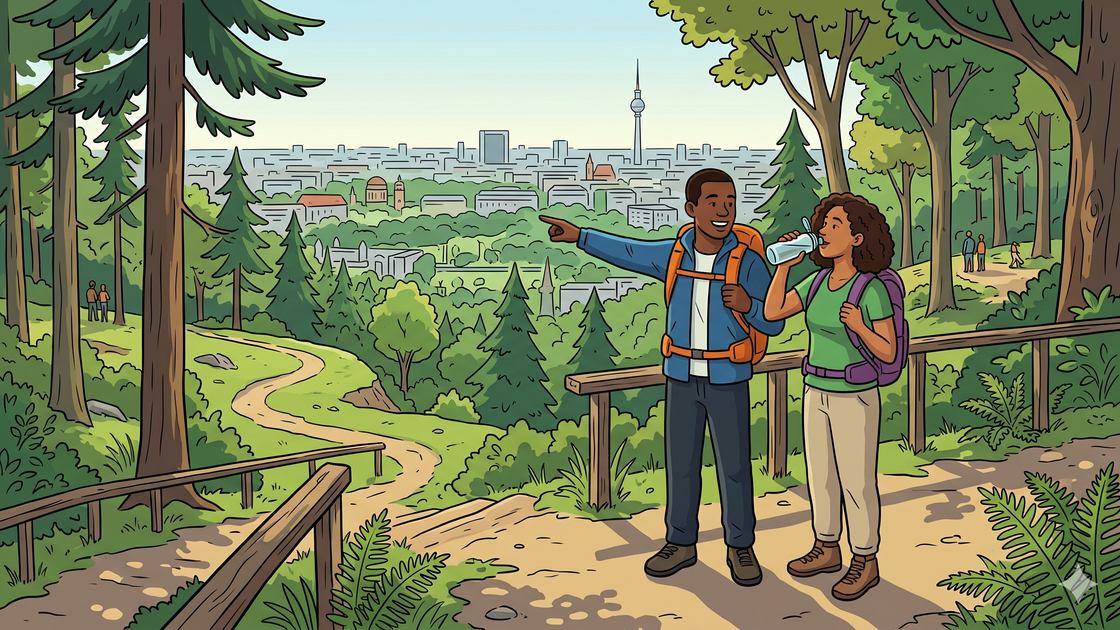
MITRA lets you find a hiking partner in Berlin without the trailside cold-approach: you browse people near you who want to walk, send an activity request to the ones you’d like to meet, and they accept the ones they want. Nobody is auto-matched — you pick who to reach out to, and they pick whether to say yes, so every hike is something both people chose.
In practice you can decide, before you even lace up, “looking for a relaxed Saturday walk around Schlachtensee this weekend,” and sort the first outing in advance. It’s the same way Berliners use it to find a tennis partner, a gym buddy or a swimming partner: choose the activity, find someone nearby, agree a time, meet in real life.
Stop postponing that day hike because nobody’s free. Find your hiking partner today. Get MITRA free on Android or download for iPhone.
Your first weekend on the trail
Pick one route you can reach by train — a Schlachtensee loop on the S1, a Grunewald walk, or the short climb up Teufelsberg — and lock in two fixed walk times, because consistency is what turns strangers into familiar faces. Put one led walk in the diary that week — a DAV Berlin day tour or a hiking Meetup — so you’re guaranteed to be around other walkers. Spend ten minutes posting a hike request on MITRA with your route and your times, so someone nearby can reach out while you sleep. Then, on your second outing, ask one walker one easy question about the trail. By the end of the weekend you’ll usually have a familiar face — and often a standing hike.
Frequently asked questions
How do I find a hiking partner in Berlin?
Pick one route — a Schlachtensee loop, a Grunewald forest walk, or a stage of the 66 Lakes Trail — and walk it at the same two times each week, so the regulars become familiar. Join a hiking club or a DAV Berlin day tour to be around other walkers, and use an activity app like MITRA to send a hike request to someone nearby who already wants a partner. Consistency plus one specific ask does most of the work.
Is Berlin a good city for hiking?
Yes, Berlin is one of Europe’s greenest big cities for walking. It’s largely flat and ringed by forests, lakes and nature parks, with the Grunewald alone covering around 3,000 hectares right inside the city. Beyond the boundary, the roughly 416-kilometre 66 Lakes Trail circles Berlin through Brandenburg in stages reachable by train, so you have everything from a gentle lake loop to a full day in the countryside.
Where are the best places to hike in and near Berlin?
For an easy, social walk, the Grunewald forest and its lakes — Schlachtensee and Krumme Lanke — are reached directly by S-Bahn and U-Bahn. Teufelsberg gives you a short climb to wide city views, and the Müggelberge by the Müggelsee in Köpenick include Berlin’s highest natural point. For something longer, walk the 66 Lakes Trail in flat stages, or head into Naturpark Barnim in the north. Pick one and become a regular.
How can I meet other hikers in Berlin?
The most reliable way is to join something with a repeating format: a hiking club, a Deutscher Alpenverein Berlin group, or a led day tour where you see the same people each time and conversation is built in. Becoming a regular on a popular route like Schlachtensee works too, especially on weekend mornings. An activity app like MITRA lets you reach walkers near you who explicitly want company on the trail.
Do I need expensive gear to find a hiking partner?
No. Most day hikes around Berlin are flat, well-marked and forgiving, so a sturdy pair of trainers or light walking shoes, a water bottle and a weather-appropriate layer are usually all you need. The lake and forest loops in the Grunewald ask very little of your kit. If you get into longer or muddier Brandenburg stages later, proper boots and a small pack help — but nothing about getting started should cost much. Turning up regularly matters far more than gear.
How does MITRA help me find a hiking partner?
MITRA lets you browse people near you in Berlin who want to walk, then send an activity request to the ones you’d like to meet. They accept the requests they want — nobody is auto-matched or paired, so you choose who to reach out to and they choose whether to say yes. You agree a route and a time, then meet in real life, making it an easy, low-pressure way to line up a hiking partner before you even leave the house.
Is it safe to hike around Berlin?
Generally yes — most forest and lake routes are well-marked, busy at weekends and close to public transport. Sensible habits still help: tell someone your route, carry water and a charged phone, and check the last train back before committing to a far-out Brandenburg stage. Longer stages can be remote between villages. Walking with a partner takes care of most of this automatically, since two people are harder to lose and there’s help on hand if someone twists an ankle.
When is the best time of year to hike near Berlin?
Late spring through early autumn — roughly April to October — is the easiest and most sociable walking season, with long daylight and dry trails. Summer weekends are when the forests and lakes are busiest and most social, which makes meeting people easier. Plenty of Berliners walk year-round; in autumn and winter you’ll want waterproof shoes, warm layers and an eye on the early sunset, but the flat terrain keeps it manageable.
Can I find a hiking partner as a beginner?
Yes, and beginners often have the easiest time because so many casual walkers are out on Berlin’s gentle routes. Flat, well-signposted loops like Schlachtensee or the Grunewald forest paths are forgiving places to start, and led club tours are graded for mixed levels. On MITRA you can simply say you’re new and looking for someone at a relaxed pace, and meet a partner who opted in for the same easy kind of walk rather than a fast all-day march.
I’m new to Berlin and don’t speak much German — can I still find a hiking partner?
Easily. Berlin is one of Europe’s most international cities and English works fine on most casual walks and among the younger hiking crowd. Many newcomers use shared activities specifically to build a social circle from scratch. On MITRA you can note your preferred language when you send a hike request, so you meet someone you can actually chat with along the trail and over coffee at the end of the walk.
Once you have someone to walk with, the next question is where. We have timed and costed nine hikes near Berlin that all start at an S-Bahn station, from an 8 km stroll to an 18 km loop, with the latest you can set off and still finish in daylight.
Want to keep reading?
- How to find a cycling partner in Berlin
- How to find a running partner in Berlin
- How to find a swimming partner in Berlin
- How to find a tennis partner in Berlin
- Bouldering in Berlin for beginners
MITRA helps you find someone nearby for the activities you already love, and arrange to meet in real life. Berlin first. Bucharest and more EU cities coming soon. Come say hi on Instagram @mitra.app — and when you’re ready, find your hiking partner on MITRA (iPhone here).
Sources
- Berlin.de — Teufelsberg (man-made hill ~120 m built from roughly 75 million m³ of WWII rubble in the Grunewald; former US/Allied listening station). https://www.berlin.de/en/attractions-and-sights/3560349-3104052-teufelsberg.en.html
- Arkenberge – Wikipedia (former construction-rubble tip in Pankow built up to ~120–122 m; now the highest point in Berlin, surpassing Teufelsberg). https://en.wikipedia.org/wiki/Arkenberge
- visitBerlin — Müggelberge (the Großer Müggelberg, 114.7 m, is Berlin’s highest natural elevation; Müggelturm observation tower). https://www.visitberlin.de/en/muggelberge
- Germany Travel (German National Tourist Board) — 66 Lakes Trail (~416 km, 17 stages, start/finish at Brandenburger Tor in Potsdam; all stages reachable by public transport). https://www.germany.travel/en/nature-outdoor-activities/66-lakes-trail.html
- Berlin.de — Grunewald (Berlin’s largest contiguous forest, ~3,000 hectares, with lakes including Schlachtensee and Krumme Lanke). https://www.berlin.de/en/attractions-and-sights/3561093-3104052-grunewald.en.html
- Deutscher Alpenverein — Sektion Berlin (~20,000 members; one of Berlin’s largest sports clubs; runs hiking groups and day/weekend tours). https://dav-berlin.de/
- Deutscher Wanderverband (DWV) — Germany’s national umbrella body for hiking clubs (founded 1883). https://www.wanderverband.de/
- Naturpark Barnim (official) — joint Berlin–Brandenburg nature park of ~750 km², reaching into Pankow and Reinickendorf. https://www.barnim-naturpark.de/en/