
Olympic water at Grünau: rowing in Berlin
Rowing in Berlin is club-based and easier than it looks. The beginner courses, the clubs that take newcomers, and how to find someone to row with.
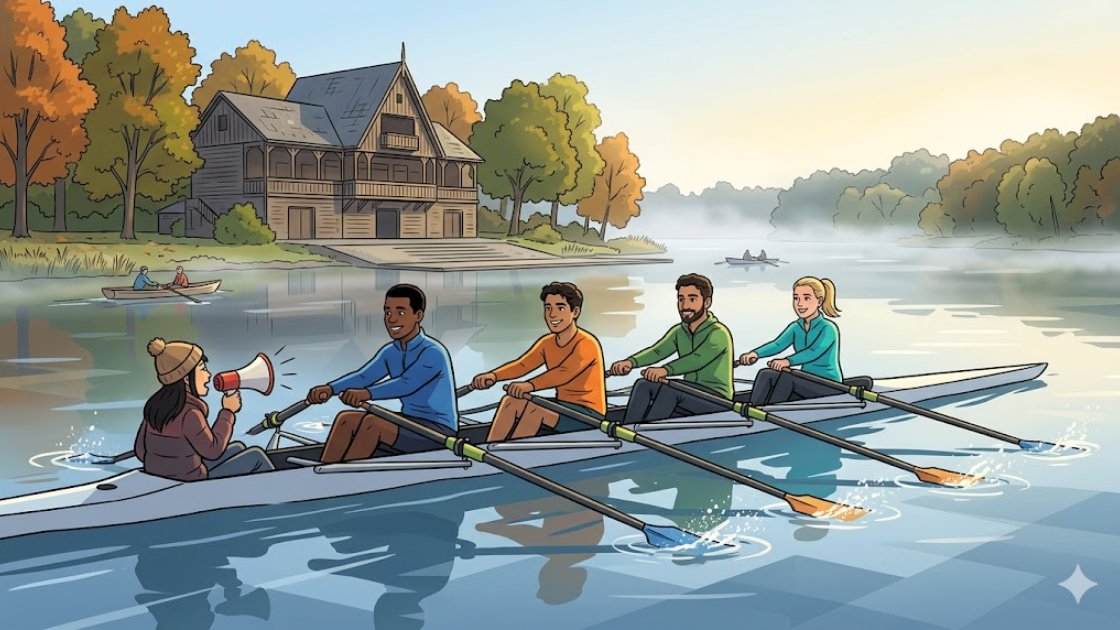
Rowing in Berlin is club-based and more reachable than it looks: you take a short learn-to-row course (a *Ruderkurs*) at one of the city’s rowing clubs, and once you’ve got the basics you row with the club through the season. Most clubs run beginner courses from spring to autumn on the lakes and rivers in the city’s southeast and out at the Wannsee, and a learn-to-row course typically costs somewhere between €30 and €180 depending on the club and whether it includes a trial membership. You don’t need to own a boat, you don’t need to be especially fit, and you do need to be able to swim. This guide covers how it works, the clubs that take complete beginners, where you’ll row, what it costs, and how to find someone to share the boat with.
The short version
Rowing in Berlin means joining a club and doing a beginner course — not renting a boat by the hour like a kayak. The easiest first step is a *Ruderkurs* (learn-to-row course): a handful of evening sessions over a few weeks where you learn the stroke in a stable, steered boat. Good beginner-friendly options include Ruder-Gemeinschaft Grünau (right on the 1936 Olympic regatta course), the Treptower Rudergemeinschaft on the Spree, and the Berliner Ruder-Club at the Kleiner Wannsee. Courses run roughly April to September, cost around €30–€180, and require you to be able to swim. Rowing is a team sport at heart — most boats need two, four or eight people — so it’s one of the most natural ways in the city to do something regularly with other people.
Contents
- The short version
- How rowing in Berlin actually works
- How to learn to row: the beginner course
- Rowing clubs in Berlin that take beginners
- Where you’ll row: Grünau, the Wannsee and the Spree
- The Olympic regatta course at Grünau
- Berlin rowing courses compared at a glance
- What rowing in Berlin costs
- Rowing for students and newcomers
- Women’s rowing in Berlin
- What to wear and bring (and can you swim?)
- What your first time in a boat feels like
- Why rowing is better with someone
- How to find someone to row with in Berlin
- Want to keep reading?
- Frequently asked questions
- Sources
How rowing in Berlin actually works
Rowing here runs through clubs, not rental desks, and that’s the one thing newcomers most often get wrong. Unlike a kayak or a stand-up paddleboard, you generally can’t just walk up and hire a rowing shell for an afternoon — the boats are expensive, tippy, and need looking after, so access comes through membership. The standard route in is a learn-to-row course at a club, after which you row in the club’s boats during open sessions through the season.
This is actually good news if your goal is to meet people. A club has a boathouse, a calendar, regular training evenings, and a crowd of members who all show up at the same slipway. You’re not booking a solo slot; you’re joining something with a rhythm. If you’d rather rent and go at your own pace on the water this summer, kayaking in Berlin and paddleboarding in Berlin are the pay-by-the-hour cousins — but rowing is the one that comes with a built-in community attached.
New to the city and looking for the kind of activity that puts the same faces around you week after week? MITRA helps you line up activity partners near you. Get it free: Google Play · App Store

How to learn to row: the beginner course
A *Ruderkurs* is a short beginner course that takes you from never having held an oar to being able to row safely with the club. Most are built the same way: a handful of sessions spread over a few weeks, run by trained coaches, in wide and stable “gig” boats rather than the narrow racing shells you’ve seen on television. You learn to carry and handle the boat, the sequence of the stroke — legs, back, arms, and the recovery back to the start — and how to keep an even keel as a crew.
The courses are deliberately gentle. At the Treptower Rudergemeinschaft, the adult beginner course runs over six sessions inside about four weeks, usually starting around 5pm on a weekday evening and lasting roughly two hours, and a big part of the first sessions is simply learning to build, carry and clean the boats so you can become a self-sufficient club member. Ruder-Gemeinschaft Grünau splits it into a shorter technique course and a longer beginner-and-returner course running over about ten sessions from April, on Wednesday evenings from 17:30. Almost every club ties the course to club membership — the course fee is often credited toward your dues if you join afterwards — because the whole point is to graduate you into the rowing season, not to sell a one-off taster.
One hard requirement runs across every club: you must be able to swim. Rowing is a water sport, you will occasionally end up in the water, and clubs treat confident swimming as non-negotiable safety ground. You don’t, however, need to arrive fit — the technique is the hard part, not the strength, and you build the fitness as you go.
Rowing clubs in Berlin that take beginners
Berlin has dozens of rowing clubs, and a good number run structured beginner courses each season. These are some of the most beginner-friendly, spread across the city’s main rowing waters.
Ruder-Gemeinschaft Grünau (RG Grünau) sits at Regattastraße 247 in Grünau, in the city’s far southeast, directly on the historic Olympic regatta course. Its courses are among the most accessible in the city: a technique course at around €30 and a beginner/returner course at around €50, both credited toward membership if you stay on, with training on Wednesday evenings from 17:30 across roughly ten sessions starting in April. It’s open to anyone 18 and over who can swim.
Treptower Rudergemeinschaft (TRG) rows out of Treptow on the Spree and the Dahme, closer to the inner city. Its adult *Einstiegskurs* costs around €56 for six sessions over four weeks, with evening starts. It’s popular — in spring 2026 the season’s courses were already fully booked by March — which is the clearest possible argument for signing up early rather than mid-summer.
Berliner Ruder-Club (BRC), one of the city’s oldest clubs, is based at Bismarckstraße 4 on the Kleiner Wannsee. It folds beginners into a three-month trial membership at around €180 that includes the beginner course plus access to the rest of club life, with training on Tuesday and Thursday evenings from 18:00 to 20:00 and Saturday mornings from 09:30, learning in steered four- and eight-person gigs.
Ruderklub am Wannsee (RaW) is a large, historic club at Scabellstraße 8 in Wannsee, with a boathouse over a hundred years old. It’s a serious rowing address, though its adult beginner intake varies from year to year — it paused adult beginner training for the 2025 season — so it’s one to check directly rather than assume.
Other names worth knowing are the Märkischer Ruderverein, which specialises in *Wanderrudern* (touring rowing — longer, scenic outings rather than racing) and runs its own courses, and the Astoria Rudergemeinschaft on the Kleiner Wannsee. Because intake genuinely changes season to season — TRG full by March, RaW paused in 2025 — the honest advice is to shortlist two or three clubs near your side of the city and check each one’s current course page rather than banking on a single club.
Want company for the first session so a boathouse full of strangers feels less daunting? Find someone nearby on MITRA to start the course with you: Google Play · App Store
Where you’ll row: Grünau, the Wannsee and the Spree
Berlin is unusually good rowing country, with three distinct stretches of water that each have their own character. The southeast — Grünau, the Langer See and the Dahme around Köpenick — is the historic heart of the sport, calm and wide, and home to the most clubs. The southwest is the Wannsee and the lakes and channels of the Havel, where clubs like the Berliner Ruder-Club and Ruderklub am Wannsee sit; it’s open, scenic, and shared with sailing boats. And the inner-city Spree and Dahme, where Treptow’s club rows, puts you closer to the centre with the city sliding past.
The waters change the experience. A morning on the glassy Langer See at Grünau feels meditative; the Wannsee can pick up a chop and wash from passing boats; the Spree is busier and more urban. If you already know you love being on Berlin’s water, rowing slots neatly alongside sailing in Berlin out on the Wannsee and the calmer paddle sports — and if you want the dry-land version of that endurance feeling, plenty of rowers cross-train with running and cycling through the winter.
The Olympic regatta course at Grünau
If you row in Berlin’s southeast, you’re rowing on one of the most storied stretches of water in the sport. The Regattastrecke Berlin-Grünau, laid out in a bay of the Dahme on the Langer See at the end of the 19th century, is the oldest sports venue in Berlin that is still in use. The first sailing regatta on this water was held in 1868 and the first rowing regatta on 27 June 1880; today the course is 2,000 metres long with six lanes for rowing and up to nine for canoeing.
Its most famous moment came in August 1936, when Grünau hosted the rowing and canoeing events of the Berlin Olympic Games, held on the Langer See from 11 to 14 August. The host nation dominated, taking five of the seven rowing golds — but the result that history remembers best went the other way: the University of Washington eight, the crew later immortalised in the book and film *The Boys in the Boat*, won the blue-riband eights final here in front of a home crowd. The historic grandstand built for those Games still stands; after a long renovation finished in 2024 it houses the Wassersportmuseum Grünau, a small museum of Berlin water-sports history that’s worth a look on a rest day. You won’t be racing in lane four for a medal, but the plain fact that your wobbly first strokes happen on Olympic water is a quietly great thing to tell people at dinner.
Berlin rowing courses compared at a glance
Here’s how the main beginner-friendly options line up. Prices and schedules are what each club published as of June 2026 — always confirm the current season on the club’s own page, since intake and dates shift year to year.
| Club | Where | Water | Beginner course | Rough cost |
|---|---|---|---|---|
| Ruder-Gemeinschaft Grünau | Regattastr. 247, Grünau | Langer See (Olympic course) | Technique + beginner/returner, ~10 sessions from April, Wed 17:30 | ~€30 technique / ~€50 course (credited to membership) |
| Treptower Rudergemeinschaft | Treptow | Spree / Dahme | Einstiegskurs, 6 sessions over 4 weeks, evenings | ~€56 |
| Berliner Ruder-Club | Bismarckstr. 4, Kleiner Wannsee | Wannsee / Havel | Beginner course inside a 3-month trial, Tue/Thu eve + Sat morning | ~€180 (3-month trial membership) |
| Ruderklub am Wannsee | Scabellstr. 8, Wannsee | Wannsee / Havel | Adult intake varies by year (paused 2025) — check directly | check current season |
| HU / TU university sports | various | Spree / Stößensee | Student beginner courses each semester | low student rates |
What rowing in Berlin costs
Getting started is cheaper than most people assume, and the ongoing cost is genuinely good value for a sport that hands you a boat, a coach and a crew. The learn-to-row course itself runs from about €30 at Grünau to about €56 at Treptow, while clubs that bundle the course into a trial membership — like the Berliner Ruder-Club’s roughly €180 three-month trial — charge more up front but include full access to the club’s boats and life for that period.
After the course, the real cost is annual club membership, which varies by club but is typically a few hundred euros a year — and for that you get unlimited rowing through the season, use of the club’s boats, and coaching, with no per-outing fee. Compared with paying by the hour for a kayak or board every weekend, a membership pays for itself quickly if you row regularly. Many clubs also credit the course fee toward your first year’s dues, so the trial effectively becomes a deposit rather than a sunk cost.
Rowing rewards turning up regularly — and that’s far easier when someone’s expecting you at the boathouse. Line up a partner on MITRA: Google Play · App Store
Rowing for students and newcomers
If you’re a student, the cheapest and most social way into rowing is your university’s sports programme. Both Humboldt-Universität and the Technische Universität run rowing through their Hochschulsport (university sport) departments, with beginner and advanced courses each semester in singles and crew boats, at low student rates. TU Berlin rows on the calm Stößensee and runs a boathouse that also offers canoeing, sailing and stand-up paddleboarding, and it keeps an English-language information page for international students; Humboldt’s rowing group trains out of its own riverside base.
One practical note for newcomers who don’t yet speak German: water-sports courses sometimes require enough German to follow safety instructions, so it’s worth checking the individual course page or emailing first. Plenty of Berlin’s rowers are international, and the club world is welcoming, but the safety briefing is the one place where language matters. Arriving in the city without a ready-made social circle is the normal Berlin starting point, not a personal failing — university rowing is one of the cleaner ways to fix it, because it bolts a sport, a routine and a crew onto the same afternoon. (If you’re piecing together a wider list of ways to get out of the flat, our guide to things to do alone in Berlin is a good companion to this one.)
Women’s rowing in Berlin
Women row in every Berlin club, and the city also has dedicated spaces for it. The Frauen-Ruder-Club Wannsee is a women’s rowing club out on the Wannsee with its own boathouse and programme, and most mixed clubs run women’s crews and welcome women into their beginner courses on the same terms as everyone else. Rowing is one of the more gender-balanced endurance sports at club level, and the crew format — where the boat only moves if everyone pulls together — tends to make for a notably supportive beginner environment.
What to wear and bring (and can you swim?)
Wear close-fitting sports clothing and leave the loose gym shorts at home, because anything baggy catches on the sliding seat and the oar handles. Most clubs ask for fitted leggings or shorts, a snug top, and trainers you don’t mind getting damp; bring a change of clothes and a towel, since you will get splashed, and clubs like Grünau explicitly note shower kit on the list. Sunglasses and sunscreen matter more than you’d think on open water, and a light layer helps for early-morning outings before the day warms up.
The non-negotiable, once more, is swimming ability — every reputable Berlin club requires it before they’ll put you in a boat, for obvious safety reasons. You don’t need any prior rowing experience, any equipment of your own, or any particular strength. The boat, the oars and the coaching all come with the course.
What your first time in a boat feels like
Your first session is humbling and addictive in roughly equal measure. You’ll most likely start in a wide, stable boat with a coach steering and calling the timing, and the first revelation is that rowing is mostly legs, not arms — the power comes from pushing against the foot-stretcher, with the back and arms finishing the stroke. The second revelation is balance: a rowing boat sits on a knife-edge, and a whole crew of beginners will lurch and over-correct and laugh about it for the first few outings.
Then, usually somewhere in the second or third session, the boat suddenly *runs* — eight oars come out of the water together, the hull glides clean between strokes, and for three or four seconds nobody is fighting it. That moment is why people get hooked. It’s also pure teamwork: you can’t manufacture it alone, which is the whole charm of the sport and the reason it pulls you back to the boathouse next week.
Why rowing is better with someone
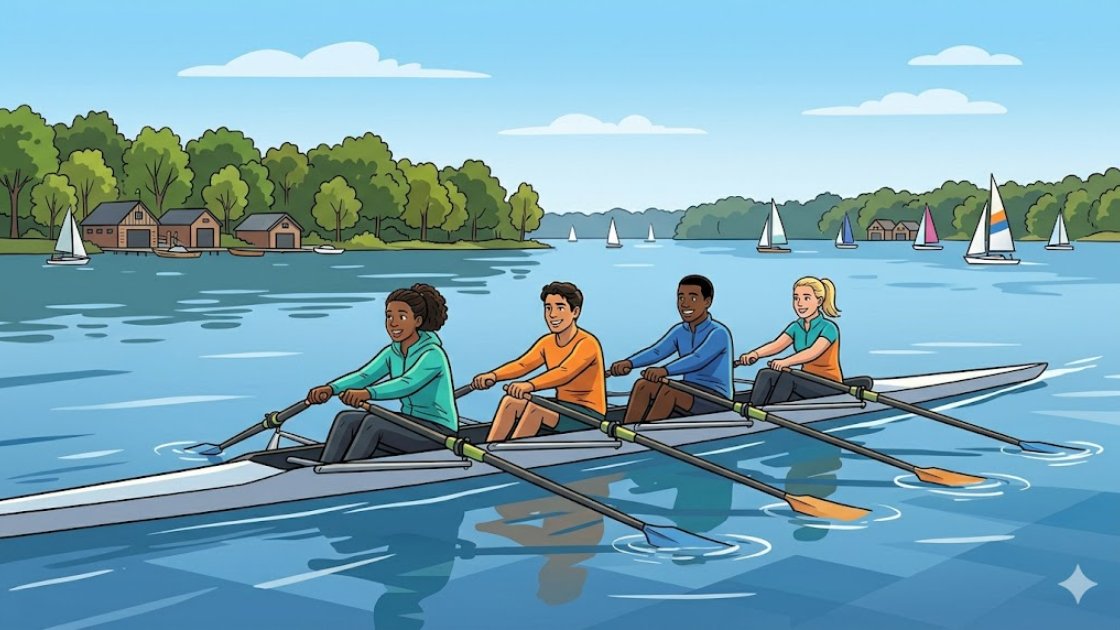
Rowing is a team sport before it is anything else, and that’s its real appeal for anyone trying to build a life in a new city. A single sculler aside, the boats that beginners learn in — doubles, quads, fours and eights — simply don’t move unless several people show up and pull in time. You can’t half-commit to a crew the way you can drift out of a solo gym habit; other people are literally waiting in the boat, which turns out to be the most reliable motivation there is.
That dependency is the point. The Köhler effect — the well-documented finding that people work harder at a physical task when their effort matters to a group than when they train alone — is rowing’s founding principle, not a nice-to-have. A crew is a standing appointment with people who notice if you’re not there, and over a season those people become the friends you came to Berlin hoping to find. If you’d rather build that same accountability on land first, a gym buddy or a regular swim partner works on the same principle.
One steady partner is often all it takes to turn “I keep meaning to try rowing” into a booked course. Find yours on MITRA: Google Play · App Store
How to find someone to row with in Berlin
The simplest way to make rowing stick is to start it with one other person, and that’s exactly what MITRA is for. The app is activity-first: you say what you want to do — try a learn-to-row course at Grünau, find someone to share a double on the Wannsee, get a non-rower to do the beginner *Ruderkurs* with you — and you send an activity request to people near you. They accept the ones they actually want, and you arrange the rest together. Nothing is automatic and nobody is paired with you behind the scenes; you choose who to reach out to, and they choose whether to say yes.
It works because so many people in Berlin are in the identical spot — keen to try something on the water, slightly reluctant to walk into a boathouse cold and alone. Lining up one partner before the first session removes the only real barrier most people have. You bring the willingness; the club brings the boat and the coaching; MITRA just helps you not do the first step by yourself.
Pick rowing — or any activity you’ve been putting off — and find someone nearby to do it with. Download MITRA free: Google Play · App Store
Come say hi on Instagram @mitra.social — we share Berlin activity ideas and the people behind them. Berlin first. Bucharest and more EU cities coming soon.
Prefer to sit lower and paddle with a double blade? Our guide to kayaking in Berlin compares nine rentals from €9 an hour, with opening hours, booking rules and the stretch of the Spree that is closed to kayaks.
Want to keep reading?
- Kayaking in Berlin — the rent-and-go water sport for afternoons on the canals and lakes.
- Paddleboarding in Berlin — where to launch a SUP across the city.
- Sailing in Berlin — learn-to-sail courses out on the Wannsee.
- How to find a swimming partner in Berlin — the lakes, lidos and the buddy rule.
- Things to do alone in Berlin — a starter list for new arrivals.
Frequently asked questions
Can you learn to row in Berlin as a complete beginner?
Yes. Most Berlin rowing clubs run a learn-to-row course (Ruderkurs or Einstiegskurs) designed for people who have never held an oar. You start in wide, stable boats with a coach, learn the stroke over several sessions, and graduate into the club’s regular rowing. No prior experience or equipment is needed — just the ability to swim and close-fitting sports clothes.
How much does a beginner rowing course in Berlin cost?
It ranges from roughly €30 to €180 depending on the club. Ruder-Gemeinschaft Grünau charges about €30 for a technique course and €50 for the longer beginner course, the Treptower Rudergemeinschaft about €56 for six sessions, and the Berliner Ruder-Club folds the course into a roughly €180 three-month trial membership. Many clubs credit the course fee toward your first year’s dues.
Do you need to be able to swim to row in Berlin?
Yes — confident swimming is a non-negotiable requirement at every reputable Berlin rowing club. Rowing is a water sport and you will occasionally end up in the water, so clubs treat swimming ability as basic safety ground. You do not need to be a strong swimmer or a strong athlete, but you must be comfortable in the water before they’ll put you in a boat.
Where can you row in Berlin?
The three main rowing waters are the southeast (Grünau, the Langer See and the Dahme around Köpenick), the southwest (the Wannsee and the Havel), and the inner-city Spree. The southeast around Grünau is the historic centre of the sport with the most clubs, the Wannsee is open and scenic, and the Spree puts you closer to the city centre.
Is rowing in Berlin available in English?
Often, yes, though it varies by club. Many Berlin rowers are international and clubs are generally welcoming, but because safety instructions are involved, some courses ask for enough German to follow a briefing. TU Berlin’s university sport keeps an English information page. The safest move is to email the club first and ask whether the beginner course can be run in English.
When is the rowing season in Berlin?
The on-water season runs roughly from spring to autumn — most beginner courses start around April and run through September. Through the winter, rowers train indoors on rowing machines (ergs) and keep fitness up with running, cycling and gym work, then return to the boats when the water warms. Sign up early: popular courses can fill by March.
Do you have to join a club to row, or can you rent a boat?
For true rowing shells, you essentially have to go through a club — the boats are expensive and need handling skill, so there’s no by-the-hour rental like there is for kayaks. The learn-to-row course is the entry point, and clubs usually tie it to membership. If you want a rent-and-go water sport instead, kayaking and stand-up paddleboarding are the pay-by-the-hour alternatives.
What’s the difference between sculling and sweep rowing?
In sculling, each rower holds two oars, one in each hand; in sweep rowing, each rower holds a single oar with both hands and the crew alternates sides. Beginners usually start in steered “gig” boats that can be set up either way. Sculling teaches balance and symmetry; sweep emphasises crew timing. Most Berlin clubs introduce you to both over time.
What should you wear to your first rowing session?
Close-fitting sportswear — fitted leggings or shorts and a snug top — plus trainers you don’t mind getting damp. Avoid anything baggy, which snags on the sliding seat and oar handles. Bring a change of clothes, a towel and shower kit (some clubs list this explicitly), and add sunglasses, sunscreen and a light layer for early outings. The boat, oars and coaching are all provided.
Is rowing a good way to meet people in Berlin?
It’s one of the best. Rowing is a team sport — most boats need two, four or eight people pulling together — so it comes with a built-in crew, a boathouse, and a regular weekly rhythm. Other people are literally waiting in the boat, which makes it stick far better than solo training. Over a season, your crew tends to become a genuine social circle.
Sources
- Regattastrecke Berlin-Grünau — Wikipedia (DE): oldest sports venue in Berlin still in use; bay of the Dahme on the Langer See; first sailing regatta 1868, first rowing regatta 27 June 1880; 2,000 m, six rowing lanes / up to nine canoeing lanes.
- Rowing at the 1936 Summer Olympics — Wikipedia: events held at Grünau on the Langer See, 11–14 August 1936; Germany took five of seven golds.
- The 1936 Berlin Olympics and the Washington Huskies — HistoryLink.org: University of Washington eight won the Olympic eights gold at Grünau in 1936 (*The Boys in the Boat*).
- Wassersportmuseum Grünau — Museumsportal Berlin and Berlin.de: water-sports museum in the historic 1936 grandstand, renovated 2016–2024.
- Deutscher Ruderverband — Wikipedia (DE) and rudern.de: German Rowing Federation founded 18 March 1883 in Cologne by 34 clubs; oldest German sports federation.
- World Rowing — World Rowing history: the international federation (FISA) founded 25 June 1892 in Turin.
- Ruder-Gemeinschaft Grünau — Ruderkurse (official): technique course ~€30, beginner/returner course ~€50 (credited to membership), Wednesdays 17:30, ~10 sessions from April, swimming required (checked June 2026).
- Treptower Rudergemeinschaft — Einstiegskurs (official): adult beginner course ~€56, six sessions over four weeks, evening starts; season booked out by March 2026 (checked June 2026).
- Berliner Ruder-Club — Anfängerkurse (official): beginner course within a ~€180 three-month trial membership; Kleiner Wannsee; Tue/Thu 18:00–20:00 and Sat 09:30; steered four-/eight-person gigs (checked June 2026).
- Ruderklub am Wannsee — RaW Berlin (official): Scabellstraße 8, Wannsee; adult beginner intake varies by year (paused for 2025) (checked June 2026).
- TU Berlin Hochschulsport — Information in English (official) and Humboldt-Universität Hochschulsport — Rudern (official): student beginner rowing courses each semester (checked June 2026).