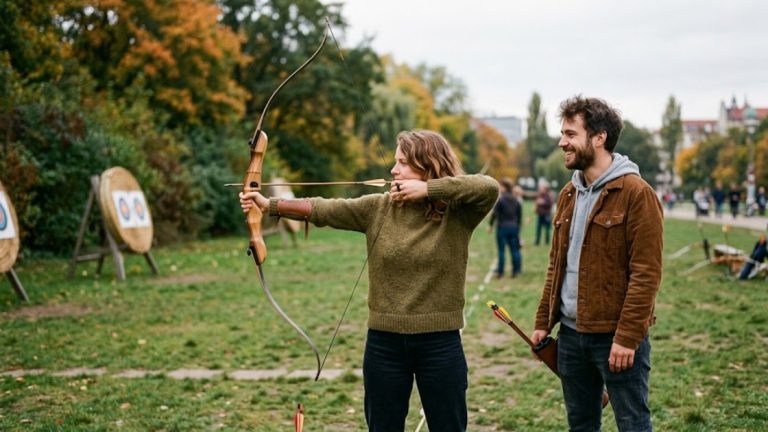
How to make friends in Germany: the 200 hours it takes
A close friend takes 200+ hours, a 2019 study found. Which weekly routes get you there fastest: Verein, choir, vhs or volunteering. Checked October 2026.
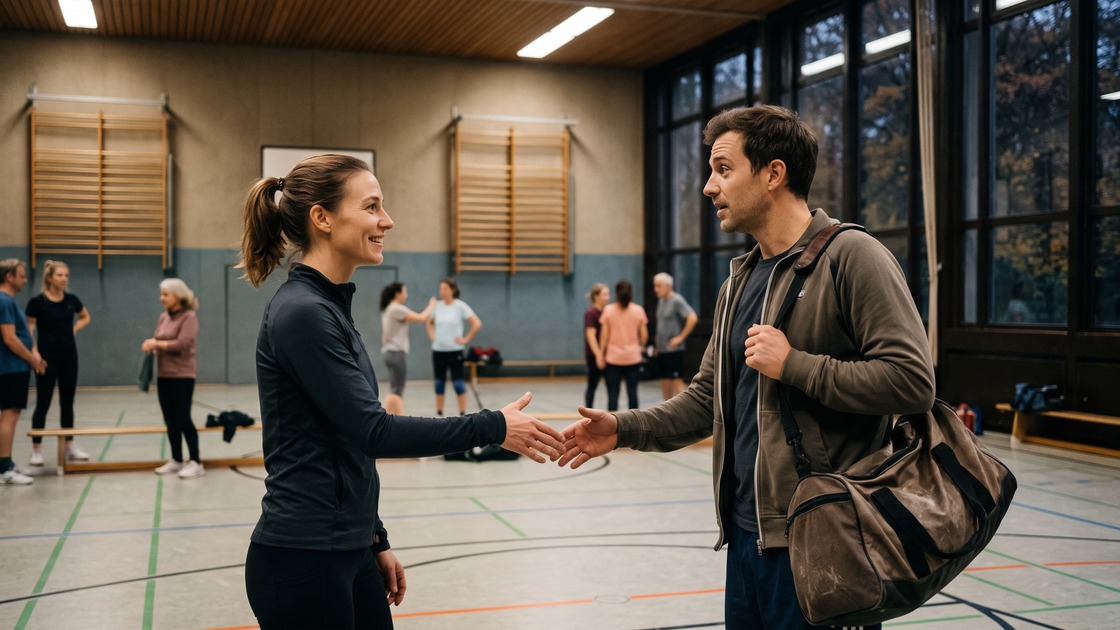
How to make friends in Germany comes down to hours with the same people. A 2019 study found a casual friendship forms after about 40 to 60 hours together, and close friends need more than 200.
The catch: at one two-hour session a week, 200 hours is 100 weeks, almost two years. That is why ten one-off meetups in ten months can leave you with nobody, while one weekly club keeps adding hours with the same people.
Jump to: the hours table · why one-off meetups don’t add up · Going with someone
Hours are easier to put in when you are not walking in alone each week: see Going with someone.
How fast each route adds the hours
The rhythms below are example schedules we picked, not rules: check the real one before you join. The last two columns are our arithmetic on the study’s 50-hour midpoint for a casual friend and 200 hours for a close one.
| Route | Example rhythm | Hours with the same people after 12 weeks | To 50 hours (casual friend) | To 200 hours (close friend) |
|---|---|---|---|---|
| Sports club (Verein) training | Weekly, 2 hours | 24 | 25 weeks | 100 weeks |
| Choir rehearsal | Weekly, 2.5 hours | 30 | 20 weeks | 80 weeks |
| Evening course at a Volkshochschule (vhs) | Weekly, 3 hours, term after term | 36 | 17 weeks | 67 weeks |
| Volunteering, same shift each time | Weekly, 3 hours | 36 | 17 weeks | 67 weeks |
| Language tandem with one partner | Weekly, 1.5 hours | 18 | 34 weeks | 134 weeks |
| Monthly Stammtisch (regulars’ table) | Monthly, 3 hours | 9 | about 17 months | about 67 months |
| One-off meetups, different people each time | Any | 2 at most with any one person | never | never |
Two things the table hides. A vhs course ends with the term, so the group scatters unless someone suggests the next one. And a Stammtisch is relaxed but slow: at 36 hours a year, it is a place to start, not a place to finish.
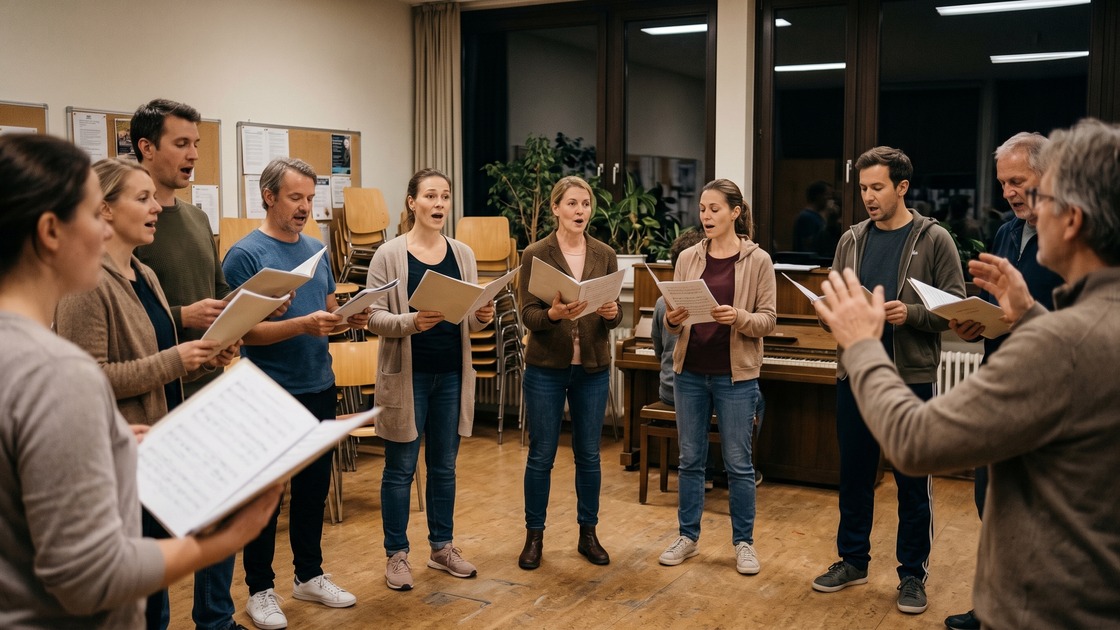
Why one-off meetups don’t add up
The hours only count when they are with the same person. In Hall’s study, people who stayed acquaintances rarely spent more than 30 hours together over nine weeks. And not all hours are equal: the University of Kansas, where Hall works, summed it up as hanging out and joking around counting, while hours spent working together “just don’t count as much.”
So a calendar full of different events can feel social and still add up to almost nothing. Ten two-hour events with ten different crowds is 20 hours of small talk, and at most two of those hours with any one person. If you want the full list of groups to try, start with our guides to social meetup groups in Berlin and making friends in Berlin, then pick one and go back.
Why Germany can feel harder
A lot of regular group activity in Germany is organised as membership. There were 628,992 registered associations (Vereine) in March 2026, according to ZiviZ im Stifterverband. Sport alone has about 86,000 clubs with about 29.3 million memberships, the DOSB counted for 2025. In Berlin, the state statistics office recorded 1,904 sports clubs eligible for public funding, with 709,979 members, as of 1 January 2025.
Our reading: if your new colleagues seem to have a full social life you never see, it is often in a club, a choir or a team that meets on the same evening every week. The way in is usually a trial session, not an invitation. You don’t need to be good at the thing. You need to keep turning up.
You are also not unusual for finding it hard. The federal family ministry’s loneliness barometer, built on the Socio-Economic Panel, puts the share of adults in Germany with a loneliness burden (feeling lonely more often than “sometimes”) at about 8% in 2017, about 28% in the first pandemic year 2020, and about 11% in 2021. Among 18 to 29-year-olds, it was about 32% in 2020.
Going with someone
In our view, the first few weeks are the hardest, when you know nobody and nothing about the place is familiar yet. Going with one other person changes those weeks: you have someone to stand next to at the first training, someone who notices if you skip, and someone to go for a drink with afterwards, which is the kind of hanging-out time the study counts.
It doesn’t need to be a close friend. A colleague, a neighbour or someone from your language course who wants the same weekly thing is enough. Agree on two things before you start: the evening, and a minimum, say eight sessions, before either of you decides it is not for you.
Picked a weekly choir, run or training but don’t want to walk in alone the first time? On MITRA you post the activity, the place and the time, say Thursday 19:00 at the club, and approve each person who asks to join. One person or a small group. Free, no card. Get MITRA on Google Play · Download on the App Store
How to make friends in Germany when your German is basic
Start where the activity does the talking. In a team sport, a choir or a climbing session, people show you what to do, and language comes second. Our guide to making friends in Berlin without German lists English-friendly options, and a weekly language tandem gives you one person you see every week while you learn.
The vhs is the other door. Berlin has twelve district Volkshochschulen, and their course search covers languages, arts, health and more. A term-long course in something other than German puts you in a room with the same people every week, and the shared task gives you something to talk about.
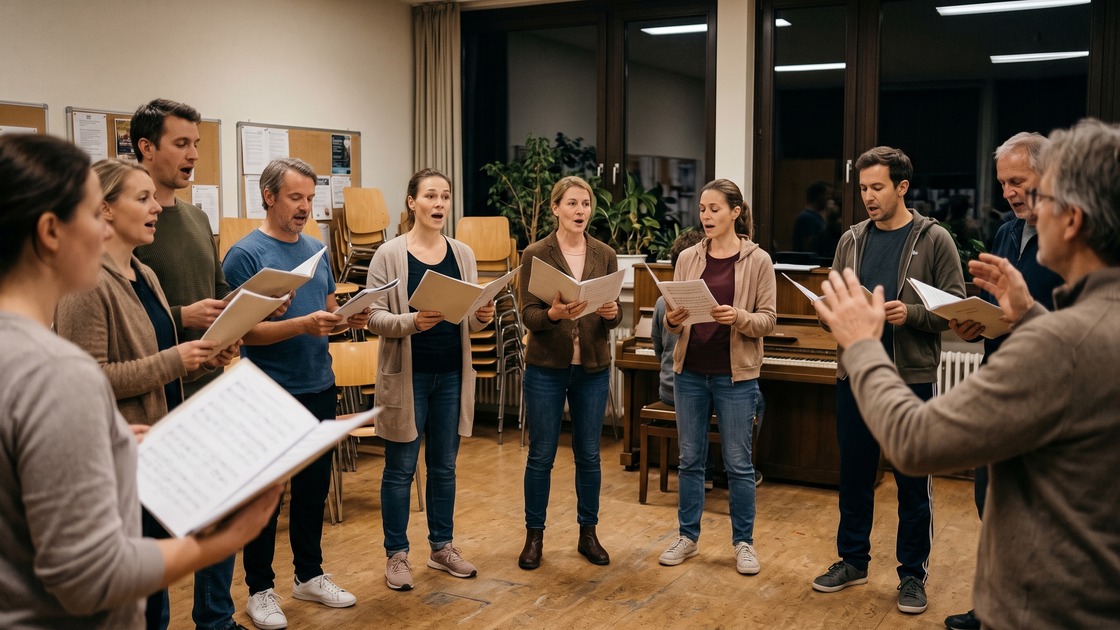
Turning the hours into friends
Hours are necessary, not sufficient. These are the habits we would build in, our view rather than a study’s:
- Stay for the part after. The drink after training or the coffee after choir is where you talk about something other than the activity.
- Keep the same slot. Same evening, same group, same team. Switching between three groups resets the count three times.
- Ask once outside the setting. After a few weeks, suggest one thing away from the club: a match, a market, a walk. Make it specific: a place and a time.
If sport is not your thing, choirs in Berlin and volunteering in Berlin both run on a weekly rhythm. To volunteer, start with LAGFA, the umbrella body of Berlin’s volunteer agencies, and its engagement platform. For a team, try football in Berlin or running clubs.
What we would do in the first 12 weeks
Pick one weekly thing you would do even if nobody became your friend. Go to the trial session in week one. Commit to eight sessions. Stay after at least half of them. In week six or seven, suggest one plan outside the club to one or two people. By week 12, a weekly two-hour slot puts you at 24 hours with the same group, about halfway to the 50-hour mark.
FAQ
How can I meet new friends in Germany?
Join something that meets weekly with the same people: a sports club (Verein), a choir, a term-long Volkshochschule course or a regular volunteering shift. A 2019 study found a casual friendship takes about 40 to 60 hours together, so repetition matters more than the number of events.
How long does it take to make a friend?
In Jeffrey Hall’s 2019 study, a casual friendship formed after about 40 to 60 hours together, moving to friend took about 80 to 100 hours, and close friends needed more than 200 hours.
What is a Verein in Germany?
A Verein is an association: a sports club, choir, garden club or similar group with members. To register one, the German Civil Code says it should have at least seven members. In March 2026, 628,992 associations were registered in Germany.
Do I need to speak German to join a club in Germany?
It depends on the club. Activity-led groups such as team sports, choirs and climbing need less talking at first, and in Berlin some groups run in English. Ask at the trial session.
Is it harder to make friends in Germany as an adult?
Germany has 628,992 registered associations, and sport clubs alone count about 29.3 million memberships, so a lot of regular group activity happens in clubs, which can feel closed from the outside. The way in is usually a trial session and then turning up every week.
The first evening is the easy part. The weeks after, when it is raining and you know two names, are when it helps to have company. If you’d rather do those weeks with someone, post the weekly activity on MITRA with the place and the time. People can ask to join, and you choose who comes. Get MITRA on Google Play · Download on the App Store
Want to keep reading?
If you’re in Berlin, the hub is how to make friends in Berlin. For the first months after a move, read moving to Berlin alone; for the apps side, the best apps to meet people in Berlin; and for evenings that don’t revolve around drinking, meeting people in Berlin without drinking.
Every figure checked on the publisher’s own site on 22 October 2026.
Sources
- https://journals.sagepub.com/doi/10.1177/0265407518761225
- https://news.ku.edu/news/article/2018/03/06/study-reveals-number-hours-it-takes-make-friend
- https://www.ziviz.de/sites/ziv/files/2026-09/vereinssterben_oder_neue_gruendungsdynamik.pdf
- https://www.dosb.de/aktuelles/news/detail/naechster-mitgliederrekord-im-deutschen-sport
- https://www.statistik-berlin-brandenburg.de/b-v-1-j
- https://www.bmbfsfj.bund.de/bmbfsfj/themen/engagement-und-gesellschaft/strategie-gegen-einsamkeit/wissen-zu-einsamkeit-vertiefen-228600
- https://www.berlin.de/sen/bildung/lebenslanges-lernen/vhs/
- https://www.berlin.de/vhs/kurse/
- https://www.lagfa.berlin/berliner-engagementplattform/
- https://www.gesetze-im-internet.de/bgb/__56.html